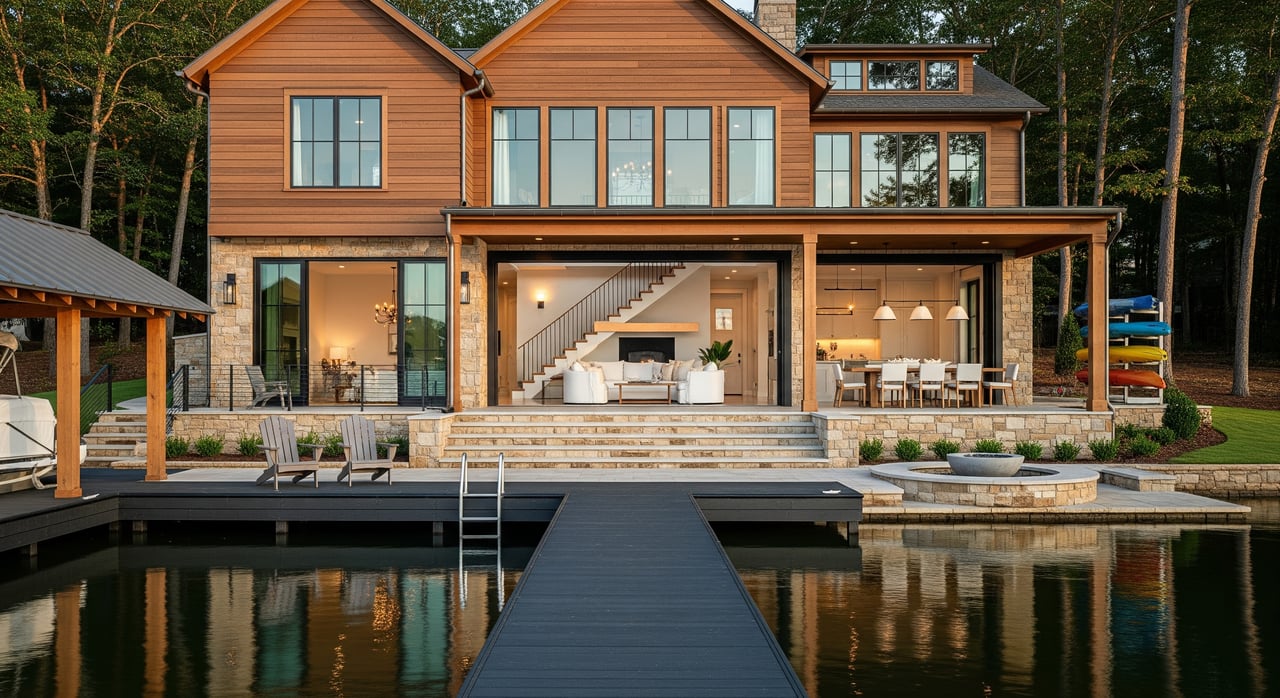
Picture your perfect weekend on Lake Guntersville: an early boat ride, a lazy lunch on the porch, and a full house of happy guests. The right floorplan makes that rhythm feel effortless. The wrong one can turn every visit into a shuffle of beds, gear, and parking. In this guide, you’ll learn how to match a lake home plan to your lifestyle, your lot, and our local conditions in Guntersville. You’ll also get practical sizing tips, a simple decision framework, and a checklist to bring to your plan review. Let’s dive in.
How lake life shapes your plan
Lake Guntersville living often means boating, fishing, and outdoor entertaining. Your plan should make those moments easy. That can look like a main-level primary suite for simple daily living, a quiet office if you work from home, and a deep garage bay that fits your boat and trailer without stress.
In Guntersville, local factors also guide your plan choice. Lakefront and near-lake lots may involve floodplain considerations, shoreline rules, and driveway access that affect where garages, porches, and stairs land. Hot, humid summers make screened porches, ceiling fans, and smart HVAC choices more than nice-to-haves. Keep these realities in mind as you evaluate layout options.
Local lake and lot factors in Guntersville
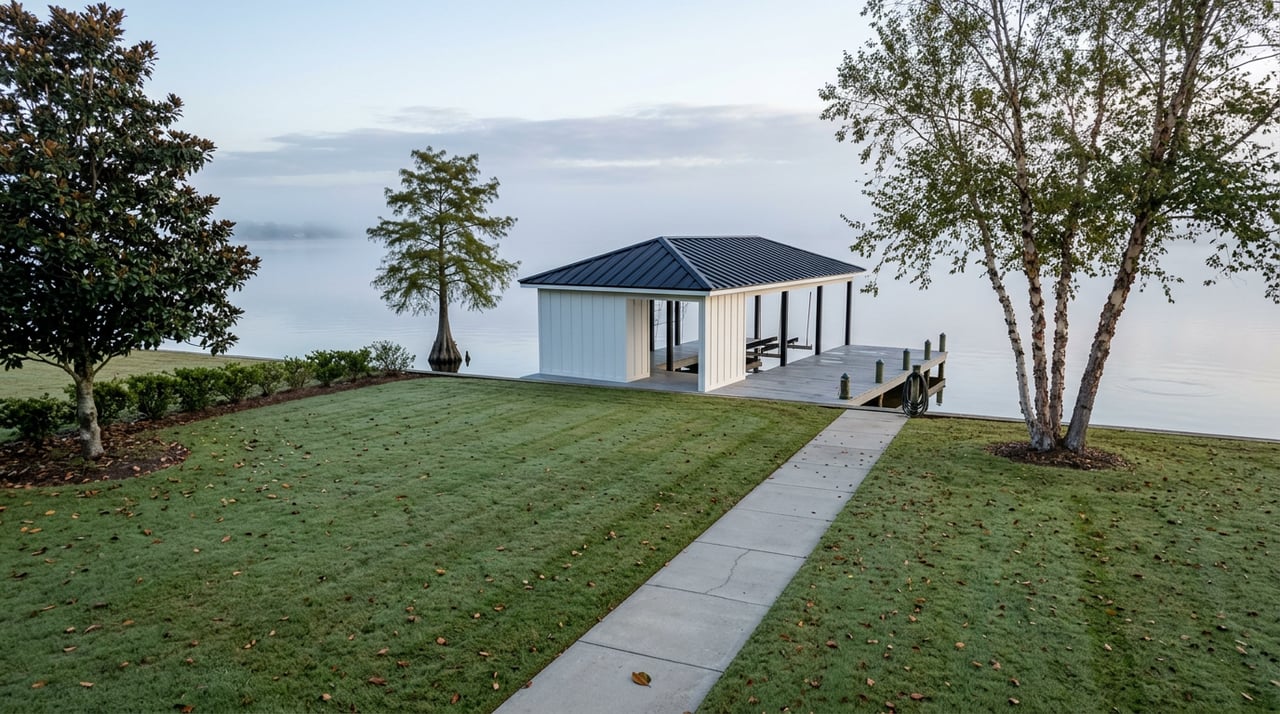
- Shoreline and dock rights: Lake Guntersville is a Tennessee Valley Authority reservoir. Confirm whether a specific lot allows lake access, dock rights, and boat lift permits, and whether any HOA or marina rules apply. Contact TVA and any neighborhood association or local marina for property-specific guidance.
- Flood zones and elevations: Many lake-adjacent parcels fall in FEMA flood zones. Check maps and obtain an elevation certificate to understand finished-floor elevation requirements, foundation choices, and insurance impacts. The City of Guntersville and Marshall County planning and permitting offices can clarify site permitting and inspections.
- Building code and permits: New construction follows Alabama’s adopted residential code and any local amendments. Local building departments outline plan requirements and shoreline lot elevation standards.
- Utilities and access: Some lots may require septic systems, well considerations, or utility extensions. Driveway layout and road easements can determine garage placement and trailer maneuvering.
- Climate and durability: Expect hot, humid summers, mosquitoes, and year-round moisture exposure. Plan for screened outdoor spaces, ventilation and dehumidification, termite protection, and corrosion-resistant hardware near the water.
Floorplan archetypes that fit real life
Boat-first plan
If your boat is part of daily lake life, start with storage and access. A deep or drive-through garage can simplify trailering and protect your investment. Typical single-boat bay depths run about 30 to 40 feet when you account for boat plus trailer and a few feet to work around the hitch. Many owners need a 10 to 12 foot door height for towers.
Include a secure gear room, around 8×8 to 10×10, for lifejackets, rods, coolers, and tools. A washdown hose bib, floor drain, ventilation, and a dedicated outlet for battery charging make cleanup safe and simple. Pair the garage location with a driveway that allows turning without backing into the street, especially on narrower lake roads.
Entertainer’s indoor-outdoor plan
If hosting is the heart of your lake life, create a seamless flow between kitchen, living, and porch. A covered porch depth of 10 to 12 feet allows comfortable seating and dining. A screened porch helps cut mosquitoes and extends your season during humid months. Ceiling fans, shade on western exposures, and durable outdoor finishes keep spaces comfortable and low maintenance.
Consider an elevated deck or a screened room off the main living area to capture views while staying out of the sun. If you cook outside, plan for a safe grill zone or an outdoor kitchen near indoor prep areas, and include storage for cushions and seasonal gear.
Work-from-home retreat plan
If you work remotely part or full time, you need a quiet, well-placed office. A dedicated office of 100 to 150 square feet supports a large desk, shelving, and equipment. Place it away from the main living area to reduce noise. Solid-core doors, basic acoustical insulation, and thoughtful wiring support video calls and focus.
If two people work from home, consider a second compact office or a small “zoom room” for calls. Keep natural light in mind, while managing screen glare with window orientation and shades. A powder bath nearby helps during longer work sessions.
Family bunk-friendly plan
Lake weekends often mean extra guests. A bunk room can boost sleeping capacity without ballooning the footprint. For two to four built-in bunks, aim for a 12×12 to 12×14 room and plan circulation so guests can move easily. A nearby full bath or a jack-and-jill setup keeps mornings smooth.
Include ventilation, sound control, and code-compliant egress windows. Flexible furniture lets the room double as a play or media space when you have fewer guests.
Main-level primary suite plan
A main-level primary suite supports single-floor living and is popular for aging in place. A comfortable suite often starts around 12×14, with 14×16 or larger feeling generous. Look for a clear bathroom layout, slip-resistant surfaces, and nearby laundry. Direct access to a porch is a meaningful daily luxury.
On sloped lots, a main-level primary may increase the footprint and foundation cost. It can also shift secondary bedrooms upstairs. Weigh these tradeoffs against the long-term livability you want.
Practical sizing and circulation guide
Use these quick benchmarks as you compare plans:
- Home office: 10×10 minimum for one person; 12×12 to 12×14 for two people or extensive shelving.
- Primary suite: 12×14 minimum; 14×16 or larger for a spa-like feel and seating.
- Bunk room: 12×12 to 12×14 with built-ins for two to four bunks.
- Gear or mudroom: 8×8 to 10×10 dedicated storage for lifejackets, rods, coolers, and wet items.
- Covered porch: 10 to 12 feet of depth for dining and lounge furniture.
- Boat bay: measure your boat length plus trailer plus 3 to 6 feet of working room; many owners land in the 30 to 40 foot depth range. Plan 10 to 12 foot door height for taller towers.
Tradeoffs to weigh in Guntersville
- Garage vs interior square footage: If you boat frequently, a deeper or drive-through bay can be essential. You can right-size interior square footage or consider a detached structure if the lot allows.
- Main-level primary vs footprint: A main-level suite improves resale to many buyers and simplifies daily life, but it increases the footprint and can add cost on sloped sites.
- Screened porch vs cost: Large screened rooms extend your season and reduce mosquitoes. They add structural and finish costs, so a smaller covered porch can be a good compromise.
- Bunk capacity vs privacy: Bunk rooms house more people in less space but reduce closets and privacy. A convertible den or guest suite balances flexibility with comfort.
A simple decision framework
Follow these steps to narrow your plan options with confidence:
- Step 1: List non-negotiables and lifestyle patterns. Who sleeps how often, how often you boat, who needs quiet work space, any accessibility needs, and your outdoor priorities.
- Step 2: Assess lot constraints and opportunities. Note slope to the lake, view orientation, setbacks and easements, dock rights, flood zone and finished-floor elevation, and trailer turning space.
- Step 3: Map needs to plan features. Frequent boating calls for a deep or drive-through garage and trailer-friendly driveway. Frequent hosting calls for a bunk room, open gathering areas, and two or more full baths. Remote work calls for a main-level office with acoustic separation. Aging in place calls for main-level suite and laundry, wider doors, and a zero-step entry.
- Step 4: Create a short list and compare tradeoffs. Check each plan against your must-haves, nice-to-haves, and deal breakers. Estimate the cost of additions like screening a porch, adding garage depth, or elevating a slab in a flood zone.
- Step 5: Prepare for a design studio review. Bring a lot survey, priorities list, square footage and budget ranges, and examples of styles you like. Ask about alternates and incremental costs to fine-tune the plan.
Example: Putting the framework to work
You plan to host your adult kids and grandkids six weekends a year, boat most Saturdays in summer, and work from home two days a week. Your non-negotiables include a main-level primary, a dedicated office, and a screened porch. Your lot slopes gently toward the water with a west-facing view.
You prioritize a plan with a 12×12 office away from the main living area, a 12×12 bunk room near a full bath, and a screened porch oriented for afternoon shade and fans. You choose a 34 foot deep garage bay with a 10 foot door for the boat and adjust interior square footage slightly to fit the budget. You confirm dock rights and finished-floor elevation before finalizing the plan.
What to bring to your plan review
Meeting with the design studio helps you translate priorities into a clear plan. Bring:
- Lot survey with topography, setback lines, shoreline location, and any easements
- Any deed restrictions, HOA covenants, or neighborhood guidelines
- Floodplain details or prior elevation certificates if available
- Photos of the lot showing view orientation and existing features
- Lifestyle priorities checklist:
- Bedroom count and peak sleeping capacity
- Main-level primary needs
- Home office requirements and privacy needs
- Boat and trailer dimensions and tower height, plus frequency of use
- Outdoor features you value most, such as screened porch, outdoor kitchen, or fire feature
- Storage needs for gear, tools, and seasonal items
- Accessibility considerations
- Budget range and any fixed cost constraints
- Timeline expectations for building and occupancy
- Questions for the designer about permitting, site prep, rough cost ranges, HVAC zoning, and durable materials
Also plan to confirm shoreline, dock, and boat lift permitting with TVA and any neighborhood association, and check with the City of Guntersville or Marshall County offices about floodplain and building permits for your site.
Materials and systems that hold up lakeside
- Moisture and HVAC: Choose a properly sized system with dehumidification and controlled ventilation to handle humid summers. Good insulation and air sealing support comfort and air quality.
- Screened and covered porches: Use corrosion-resistant fasteners, outdoor-rated fixtures, and durable finishes for longevity near the water.
- Flooring: Consider moisture-tolerant flooring on the first floor, especially in entry, mudroom, and kitchen areas.
- Termite and rot resistance: Use treated framing where needed, composite decking where appropriate, and maintain regular inspections and treatments.
- Boat bay mechanicals: Plan for floor drains, a safe washdown area with proper runoff, and secure storage for fuels and chemicals per applicable codes.
Next steps
Choosing the right lake home plan in Guntersville starts with your life, then aligns with your lot, local rules, and our climate. When you bring clear priorities and the right documents to your plan review, it is much easier to fine-tune room sizes, outdoor living, and boat storage so everything works the way you live.
If you are ready to explore floorplans or discuss a custom design, schedule a design consultation with the local team that plans communities and builds homes around Lake Guntersville every day. The on-site design studio, led by Rebecca Hinds, will help you translate your wishlist into a buildable plan and finishes that last. Start the conversation with Ainsworth Homes LLC.
FAQs
What should I consider first when choosing a Guntersville lake home floorplan?
- Start with lifestyle non-negotiables like boating frequency, hosting needs, and work-from-home space, then check lot realities such as slope, flood zone, dock rights, and driveway access for trailers.
How deep should my garage or bay be for a boat and trailer in Guntersville?
- Measure your boat plus trailer length and add 3 to 6 feet of working room; many lake owners land between 30 and 40 feet of depth, with a 10 to 12 foot door height for towers.
Does a main-level primary suite make sense on a sloped Guntersville lot?
- Yes for single-floor living and resale appeal, but it can increase the footprint and foundation cost; balance convenience with site constraints and budget.
How big should a bunk room be in a Guntersville lake house?
- A 12×12 to 12×14 room supports two to four built-in bunks with thoughtful circulation and storage, plus a nearby full bath or jack-and-jill layout.
What outdoor living features work best for Lake Guntersville’s climate?
- A covered or screened porch 10 to 12 feet deep with ceiling fans provides shade and airflow, while durable finishes and corrosion-resistant fixtures handle humidity.
How do flood zones affect my Guntersville floorplan and foundation?
- Flood zones can set finished-floor elevation and foundation type and may affect insurance; review FEMA mapping and check with local planning and permitting offices early in design.
What should I bring to a design studio plan review in Guntersville?
- Bring a lot survey, HOA or deed documents, any flood or elevation info, photos, your priorities list, budget and timeline, boat dimensions, and questions about alternates and permitting.